
 Available in US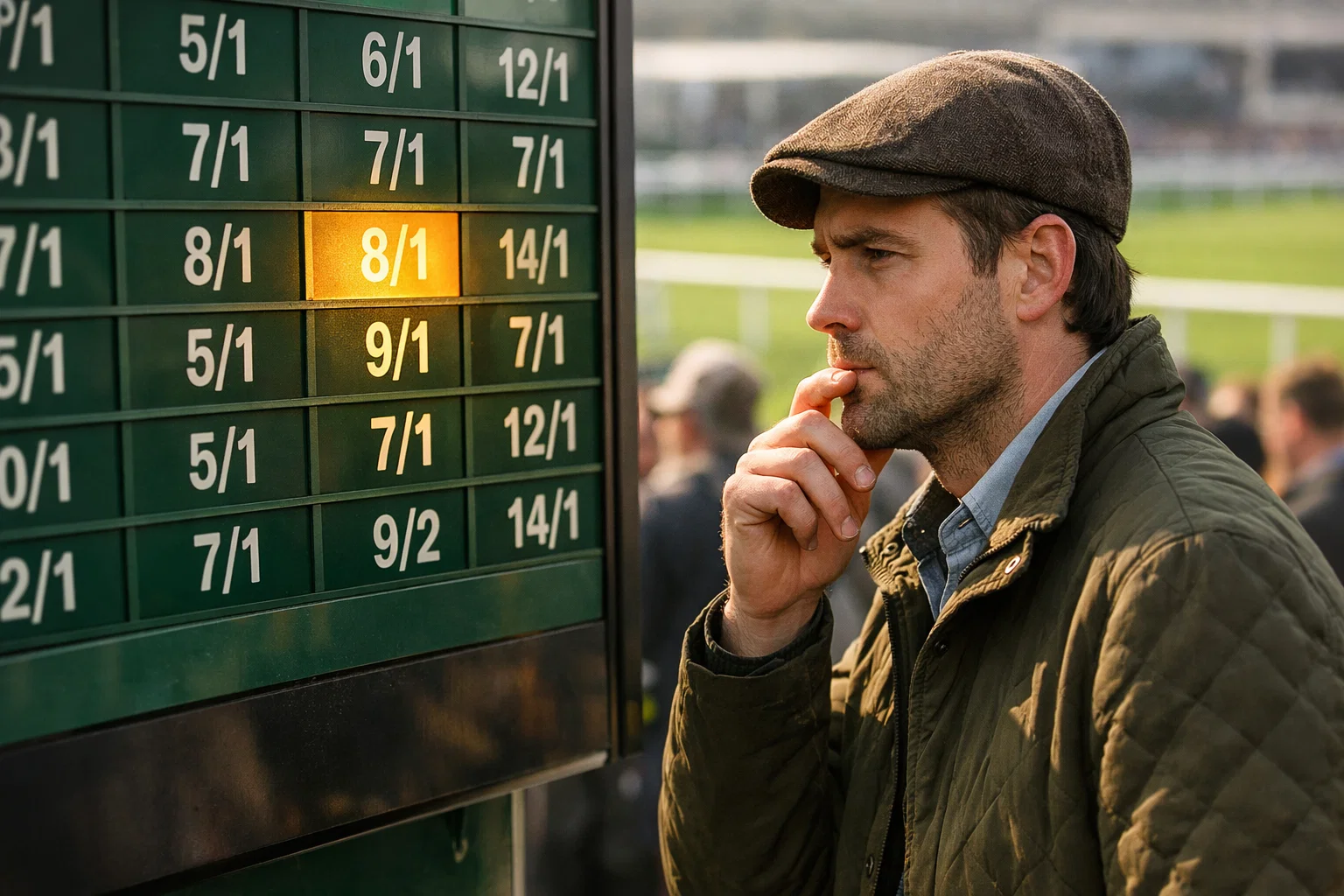
In this guide
The Hype Behind Enhanced Odds
Every March, the Cheltenham Festival marketing machine kicks into overdrive and bookmakers plaster enhanced odds across every surface they can find. A horse priced at 5/1 suddenly appears at 8/1 or 10/1. The numbers look generous. The instinct is to jump in before the offer vanishes.
But enhanced odds at Cheltenham are not gifts. They are calculated customer-acquisition tools with terms designed to limit the bookmaker’s exposure. Max stake restrictions, winnings caps, and payout structures all work to contain what looks, on the surface, like a terrible deal for the operator. In many cases, the boost is funded from exactly the same marketing budget that pays for television adverts and social media campaigns. The difference is that a boost feels like value. An advert does not.
That does not mean every boost is worthless. Some enhanced odds offers at the 2026 Festival will deliver genuine edge — situations where the bookmaker’s subsidy outweighs the restrictions. The skill is in telling them apart. According to analysis from OddsIndex, the real value of a typical promotional free bet sits at around 60–75% of its face value, and enhanced odds work on a similar principle: the headline number never tells the full story.
This guide breaks down the mechanics behind enhanced odds, gives you a repeatable method for evaluating any boost in under a minute, and identifies the specific scenarios where taking a Cheltenham price boost is a smart play — and where it is pure marketing theatre. Boost or bait: by the end, you will know which is which.
See also: cheltenham betting offers — your source for Cheltenham free bets.
How Enhanced Odds Actually Work
An enhanced odds offer takes a standard market price and inflates it — sometimes modestly, sometimes dramatically. A horse trading at 4/1 might be boosted to 6/1 or 7/1 for a particular bookmaker’s promotion. The question worth asking is: who pays the difference?
The answer is the bookmaker’s marketing department, not the trading desk. Enhanced odds are subsidised promotions. The traders still price the horse at 4/1 in their internal models, but the marketing team bolts on extra value to attract sign-ups, deposits, or increased turnover during the Festival. It is advertising with a bet slip instead of a billboard.
This funding mechanism is important because it explains the restrictions. If the boost were genuinely offered at scale, the bookmaker would face enormous liabilities on popular Cheltenham runners. To prevent that, they cap the exposure through two primary controls: maximum stake limits and maximum winnings caps.
Max stake limits are the most common restriction. A boost might offer a short-priced favourite at 8/1 instead of 4/5, but the maximum stake is £1. At that point, the bookmaker’s maximum additional liability is a few pounds — pocket change for a Cheltenham Festival marketing campaign. William Hill projects total industry-wide betting of around £450 million across the four days of the 2026 Festival. A subsidised boost costing a few hundred pounds in payouts is rounding error against that figure.
Winnings caps work differently. Instead of limiting your stake, the bookmaker caps the total payout. You might back a 20/1 shot boosted to 33/1 with a £10 stake, but the maximum payout is capped at £200. If the horse wins, you receive £200 rather than the £340 the enhanced price implies. The cap effectively reduces your real odds back down to something closer to the original market price.
Some enhanced odds offers combine both mechanisms. Others layer in additional conditions — the bet must be placed before a certain time, it must be a single rather than part of a multiple, or the boost only applies to win markets rather than each-way. Each restriction erodes the headline value, and each one needs checking before the bet is placed.
Evaluating a Boost: The Three-Check Method
Not every boost needs a spreadsheet. A quick mental framework sorts the worthwhile from the worthless in under sixty seconds. Three checks, done in order, and you have your answer.
Check one: what are the original odds? Before the boost, what is this selection actually trading at across the market? If a horse is 5/1 everywhere else and the boost takes it to 7/1, you have a genuine edge. If the horse is 5/1 everywhere else and the boost takes it to 5/1 with a different bookmaker that had it at 4/1, the “boost” merely brings the price in line with the rest of the market. Compare the boosted price against the best available odds at other operators, not against the same bookmaker’s original price. This is where most punters are caught — the reference point is wrong.
Check two: what is the implied probability shift? Convert both the original and boosted odds to implied probabilities. A horse at 4/1 has an implied probability of 20%. Boosted to 7/1, the implied probability drops to 12.5%. That 7.5 percentage point gap is the value the bookmaker is offering. The wider the gap, the more significant the edge. In practice, a boost that shifts the implied probability by more than 5 percentage points is worth investigating. Anything less than 2 percentage points is cosmetic.
The calculation is straightforward: divide 1 by the decimal odds. A price of 5.0 (4/1 in fractional) gives an implied probability of 0.20, or 20%. A boosted price of 8.0 (7/1) gives 12.5%. Subtract the second from the first to find the edge the boost provides. If you do not normally think in decimals, most betting apps display both formats — use whichever is faster for you.
Check three: what is the maximum stake multiplied by the maximum payout? This is where the theoretical edge meets practical reality. A 7.5 percentage point implied probability shift sounds excellent, but if the max stake is £1 and the payout is capped at £8, the maximum possible profit is £7. Compare that against the same stake placed at the best available unboosted price. If the difference is less than a couple of pounds, the boost is not changing your Festival economics in any meaningful way.
Run these three checks on any Cheltenham 2026 price boost and you will have a clear answer within a minute. The boost either passes all three — genuine edge, meaningful probability shift, worthwhile at the available stake — or it fails at one step and you move on.
One additional factor worth considering is timing. Some Cheltenham boosts are available for a limited window — early morning, pre-race, or first-bet-of-the-day only. If the boost passes all three checks but requires you to alter your normal betting routine in ways that might lead to hasty decisions, factor that into the assessment. A good boost on a horse you have not researched is still a bad bet.
When Boosts Are Worth It — and When They’re Not
The three-check method gives you a binary result, but certain Festival scenarios tilt the odds in favour of a boost being genuinely useful. Knowing these patterns saves time across four days of relentless promotional noise.
Boosts on shorter-priced selections tend to offer better relative value. When a bookmaker boosts a 2/1 shot to 3/1, the subsidy required is smaller, meaning the operator can afford to be more generous with stake limits. A £10 or £25 max stake on a 3/1 shot produces a meaningful potential profit. By contrast, boosts on outsiders — a 20/1 shot pushed to 33/1 — almost always carry a £1 max stake because the potential liability is too large. The first scenario can genuinely improve your returns. The second is a marketing exercise that costs the bookmaker very little.
Boosts on races with larger fields, particularly Cheltenham handicaps, also deserve more attention. In a 20-runner handicap, the natural price volatility is higher and the market is less efficient. A boosted price on a handicap runner is more likely to represent genuine value than a boost on a short-priced favourite in a four-runner Grade 1, where the market has been picked apart by professional money.
There are also timing patterns. Day 1 of the Festival typically produces the most aggressive boosts as bookmakers compete for early engagement. The Supreme Novices’ Hurdle and Champion Hurdle attract the heaviest promotional activity. By Thursday and Friday, the boost volume may increase but the quality tends to decline — operators have already acquired their Festival sign-ups and the remaining marketing budget is thinner.
Where boosts are almost never worth it: multi-selection boosts with conditions that all legs must win (these are accumulators in disguise with poor expected value), boosts on unnamed “mystery” markets settled at the operator’s discretion, and boosts that require you to opt in via a promotional code and then place additional qualifying bets before the boost activates. The friction is deliberate. The more steps between you and the enhanced price, the less likely it is to represent genuine value.
The fundamental question remains the same across all four days: does the boosted price, at the available stake, return more than the best price you could get elsewhere without restrictions? If yes, take it. If no, the boost is decoration. At Cheltenham 2026, some of the enhanced odds on offer will pass this test comfortably. Most will not. The three-check method keeps you on the right side of that line.
Explore Cheltenham super boost offers.
Staying in Control With Boosted Prices
Enhanced odds can create urgency that leads to impulsive decisions. If a boost tempts you to bet more than you planned or on a race you had no intention of following, step back. Promotional offers should fit within your existing budget and strategy, not override them.
Set a daily spending limit before the Festival begins and stick to it regardless of how many boosts appear. If gambling stops being enjoyable, support is available through BeGambleAware.org or by calling the National Gambling Helpline on 0808 8020 133. All UK-licensed bookmakers also offer deposit limits, cooling-off periods, and self-exclusion tools directly within their apps.
