
 Available in US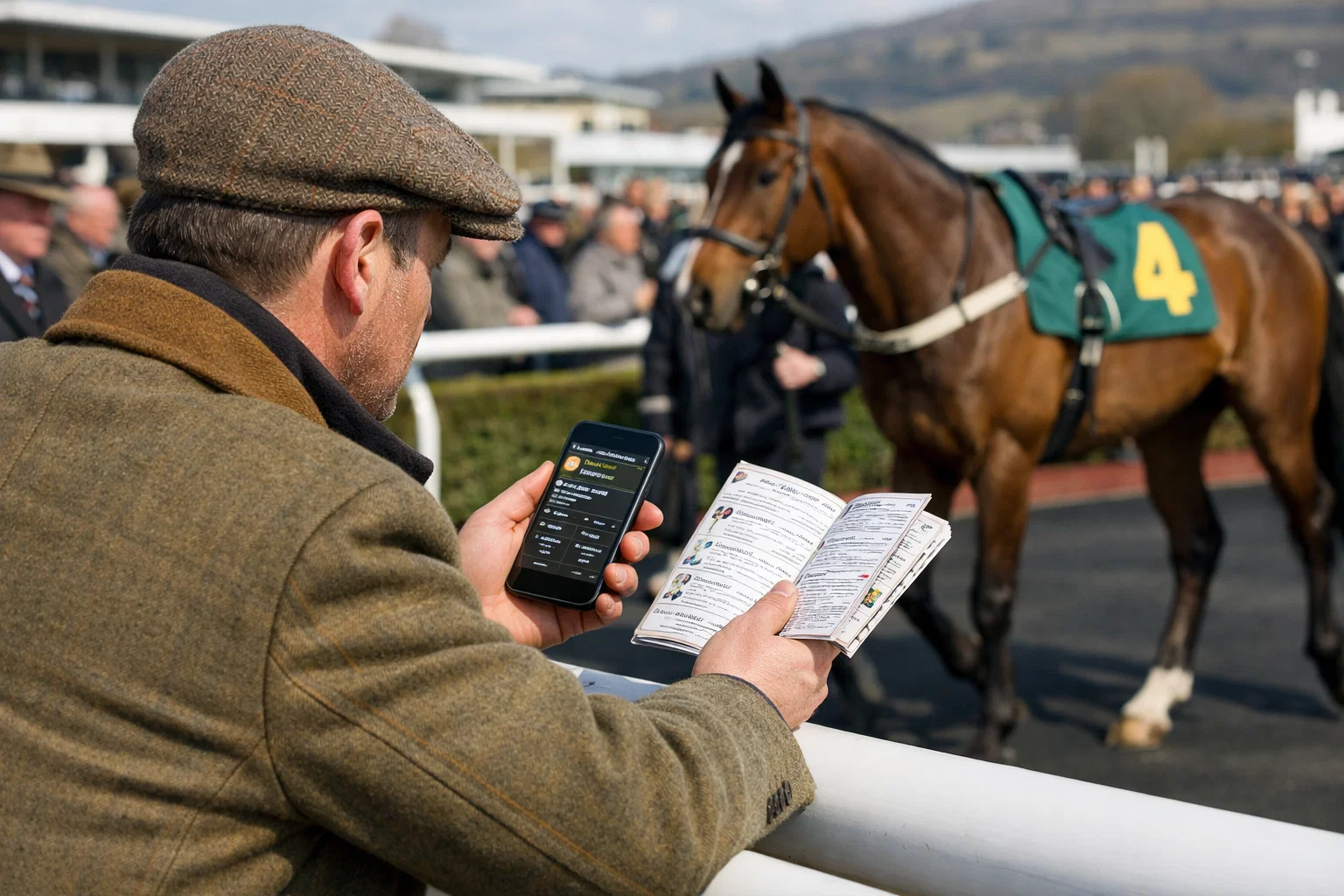
In this guide
Flipping the Usual Approach to Betting
Most punters work in one direction: they study the form, pick a horse, and then look for whatever free bet or promotion happens to be available. The offer is an afterthought — a bonus if one exists, irrelevant if it does not. The selection drives everything.
There is nothing wrong with this approach when it works. But at Cheltenham Festival, where bookmakers release dozens of promotions across 28 races over four days, treating offers as an afterthought leaves value on the table. A 10/1 each-way selection backed with an extra-place offer on a 20-runner handicap is a fundamentally different bet from the same selection backed without extra places. A 3/1 fancy with BOG active on a volatile morning market is worth more than the same horse backed at the same price without BOG. The offer does not change the horse. It changes the maths around the horse.
The smarter workflow is to pick first, then match. Start with your selection based on form, going, trainer patterns, and race conditions. Then, before you place the bet, scan the available offers and choose the one that amplifies your position. This is not about letting promotions dictate your selections — it is about ensuring that your selections receive the maximum promotional support available. In 2025, bookmakers avoided an estimated £50 million in payouts on Day 1 when favourites collapsed. The punters who paired their each-way selections with extra-place offers and BOG captured value even when their outright picks lost. Alignment is what separates a good pick from a good bet.
See also: cheltenham betting offers — your Cheltenham offers resource.
Aligning Your Selections with Available Offers
The type of offer that best complements your bet depends on three factors: the price of your selection, the type of race, and the nature of your conviction. Here is a decision framework that matches each scenario to its optimal promotional partner.
Short-priced favourite (odds-on to 3/1): BOG is your primary tool. Short-priced horses in competitive Festival races are prone to morning-price drift as the market adjusts through the afternoon. BOG captures any upward movement at no cost. Enhanced odds on the favourite are secondary — they add value if the max stake is reasonable, but BOG should be activated first. If a money-back-if-second offer is available on the race, it provides additional downside protection for a strong fancy that finishes close but not first.
Mid-range selection (4/1 to 8/1): This is the free bet sweet spot. If you are deploying a free bet, selections in this odds range maximise expected value (75–85% of face value). If using your own cash, look for enhanced odds boosts that push the price above the market average. Acca boosts are also relevant here — a mid-priced selection is a natural leg in a three-fold or four-fold accumulator where profit boost percentages add meaningful value.
Outsider (10/1 or longer): Each-way with extra places is the dominant strategy. An outsider is unlikely to win, but finishing in the places — particularly with extended place terms — can still produce a profitable result. Extra-place offers on large-field handicaps are specifically designed for this scenario. Enhanced odds on outsiders are less useful because the max stake is typically £1, limiting the practical value. Focus on each-way terms rather than headline price enhancements.
Each-way selection in a big handicap: Extra places and enhanced place terms are the priority. BHA data confirms that turnover on Premier fixtures like Cheltenham rose by 1.1% even as the broader market declined, reflecting the concentration of punter interest on Festival events. Big handicaps drive a significant share of that volume, and bookmakers respond with their strongest each-way promotions. Check multiple operators for the best combination of extra places and place fractions before committing.
No strong opinion on the winner: If you want exposure to a race without a firm conviction, money-back-if-second is the lowest-risk entry point. It limits your downside to the scenarios where the money-back trigger does not activate, while giving you a full-profit upside if your horse wins. This approach works best on championship races with small fields, where the probability of your horse running second is higher per selection than in a 20-runner handicap.
The Offer-Selection Workflow: Step by Step
Applying the alignment framework to each race takes a few minutes of preparation. Here is the practical workflow to follow on the morning of each Festival day.
Step one: review the card. Before looking at any offers, study the day’s seven races. Identify your selections based on form analysis, trainer patterns, going conditions, and any other factors that inform your racing judgement. Note the odds of each selection and the field size of each race. This is your baseline — the selections come first.
Step two: survey available offers. Open two or three bookmaker apps and check their promotions pages for the day. Note which races have enhanced odds, which have money-back specials, which have extra places, and which have daily price boosts. Write down the key terms for each offer: max stake, trigger conditions, expiry time. This survey takes five to ten minutes and gives you a map of the day’s promotional landscape.
Step three: match selections to offers. For each selection from step one, identify the best available offer from step two. Use the decision framework above: short-priced picks get BOG, mid-range picks get free bets or enhanced odds, outsiders get each-way extra places. If no suitable offer exists for a particular selection, back it at the best available market price without promotional support. Not every bet needs an offer — the alignment improves value when a match exists, but it should not prevent you from backing a horse you believe in.
Step four: place bets in sequence. Place qualifying bets on the earliest race first (to credit free bets as soon as possible), then deploy free bets and promotional bets on later races. Confirm that each bet meets the specific terms of the offer before placing it — minimum odds, bet type, opt-in requirements.
Step five: record and review. After each race, note whether the offer delivered value (did the extra place pay out? Did BOG improve the price? Did the money-back trigger?). This data helps you refine your alignment strategy for subsequent days. By Thursday and Friday, you will have a clear picture of which offer types have been most profitable for your betting style.
Example Combinations: Tips Matched with Offers
Three worked examples illustrate how the alignment workflow produces better outcomes than backing selections without promotional support.
Example one: Champion Hurdle favourite at 5/2. Your form analysis points to the Champion Hurdle market leader. Before backing it, you check for BOG (active at your chosen bookmaker — confirmed), enhanced odds on the favourite (available at 3/1 with £10 max stake from a second bookmaker), and money-back-if-second (available with a £25 refund as cash from a third bookmaker). The optimal play: take the 3/1 enhanced odds at £10 for the uplift, plus a separate £25 bet at 5/2 with the money-back-if-second operator with BOG active. If the horse wins, you collect on both bets with the enhanced price adding value. If it finishes second, the money-back refunds your larger stake. If it finishes third or worse, your combined loss is £35 — the two stakes. Without alignment, you would have placed a single £35 bet at 5/2 with no downside protection and no price enhancement.
Example two: Coral Cup outsider at 14/1 each-way. You fancy a horse in the Coral Cup handicap hurdle. The race has 22 runners. You check for extra places: one operator is paying 6 places instead of the standard 4 at 1/4 odds. Another is paying 5 places at 1/5 odds. The 6-place, 1/4-odds offer is superior. You back the horse £10 each-way with that operator. The standard terms would pay places 1–4. The extra-place terms pay places 1–6. If your horse finishes fifth or sixth, you collect approximately £45 on the place portion where standard terms would have returned nothing. The offer has not changed your selection — it has changed the range of profitable outcomes.
Example three: free bet on a Thursday novice hurdle. You have a £10 free bet from a Daily Bet Club that expires today. Your strongest Thursday selection is a novice hurdler at 5/1 in a 10-runner race. The expected value of the £10 free bet at odds of 5/1 is £8 (80% of face value). You place the free bet on your selection. If it wins, you receive £40 profit (stake not returned). If it loses, the free bet is consumed at no cash cost. Without the alignment workflow, you might have used this free bet on a shorter-priced selection at 2/1, capturing only £5 in expected value instead of £8. The three-pound difference in EV comes entirely from choosing the right odds for the free bet, not from choosing a different horse.
Read the Cheltenham betting guide 2026.
Letting Strategy Lead, Not Offers
The offer-alignment workflow is designed to improve the value of bets you were already planning to make. It is not a reason to bet on more races or at higher stakes. If an offer encourages you to bet on a race you would otherwise skip, the offer is controlling your behaviour rather than supporting your strategy.
If gambling is affecting your wellbeing, BeGambleAware.org provides free support. The National Gambling Helpline is available on 0808 8020 133.
