
 Available in US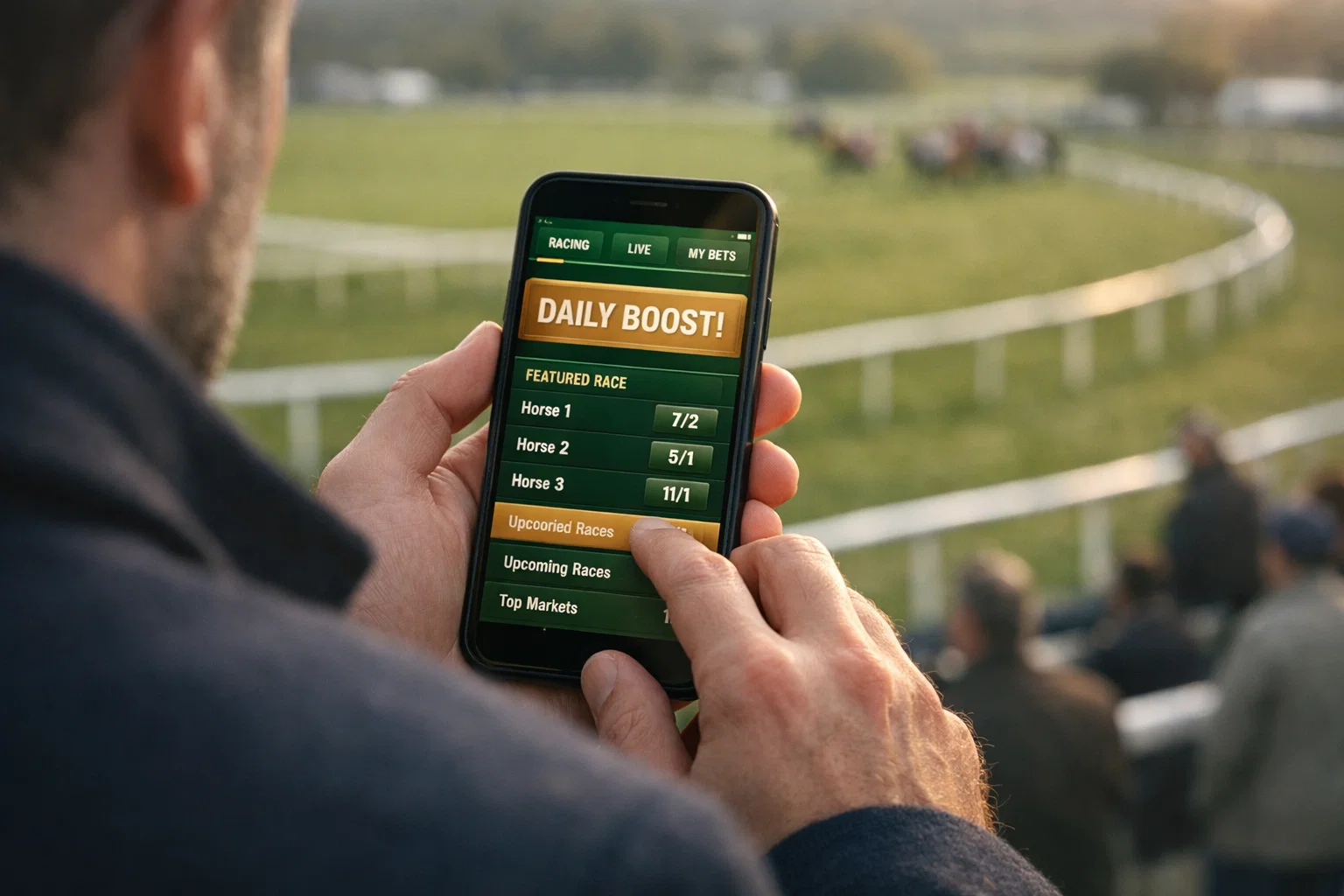
In this guide
- Beyond the Sign-Up Headline
- Why Bookmakers Need Existing Customers at Cheltenham
- Daily Price Boosts: What to Expect Each Day
- Bet Clubs and Loyalty Programmes: Midnite, bet365, and More
- Acca Insurance for Existing Customers
- Reload Bonuses and Deposit Matches
- Bookmaker Comparison: Existing Customer Offers Side by Side
- Maximising Value from Multiple Accounts
- Controlling Volume Across Multiple Platforms
Beyond the Sign-Up Headline
Search for “Cheltenham betting offers” and the results are dominated by sign-up deals — new customer promotions designed to convert first-time depositors. The emphasis is understandable. New customer offers carry the largest headline amounts and the highest affiliate commissions. But they represent a fraction of the promotional value available during Festival week, and they are irrelevant to the majority of active bettors who already hold accounts with the major bookmakers.
Existing customer offers — daily boosts, Bet Clubs, acca insurance, reload bonuses, and loyalty rewards — operate differently from welcome deals. They are less aggressively marketed, harder to find, and spread across multiple touchpoints within each bookmaker’s platform. They also tend to carry more favourable terms: lower wagering requirements, cash payouts instead of free bet credits, and conditions that reward consistent engagement rather than one-off qualifying bets.
This guide maps the existing customer promotional landscape for Cheltenham 2026. It covers what to expect from each major category of offer, how to track daily promotions across multiple bookmakers, and how to extract value from loyalty programmes that most punters ignore. Loyalty pays differently from acquisition — the amounts are smaller per offer but the cumulative value across 28 races and four days can exceed what any single sign-up deal provides.
See also: cheltenham betting offers — compare every Cheltenham free bet and bonus.
Why Bookmakers Need Existing Customers at Cheltenham
Bookmaker economics during Cheltenham week are driven by two competing pressures: the need to acquire new customers and the need to retain existing ones. Acquisition gets the headlines, but retention generates the revenue. A new customer who signs up, claims a free bet, and never returns costs the bookmaker money. An existing customer who bets consistently across all four Festival days generates turnover that justifies the promotional spend several times over.
The retention imperative has intensified as the broader market contracts. According to the BHA Racing Report for 2024, overall betting turnover on British horse racing fell by 6.8% compared to the previous year. The decline continued into 2025, with turnover dropping a further 4.2% in the first nine months of the year compared to the same period in 2024, as reported in the BHA’s Q3 2025 report. That sustained contraction means every existing customer who stays active during Festival week is disproportionately valuable. Bookmakers cannot afford to lose them to competitors, and the promotional offers reflect that anxiety.
Cheltenham sits at the centre of this dynamic because it concentrates more betting volume into a single week than any other racing event. Existing customers who might spread £200 across a month of Saturday cards will spend that same amount in four days during Festival week. The bookmaker’s challenge is ensuring those customers spend it with them, not with a rival offering better daily boosts or a more generous acca insurance deal. This competition among operators for the attention of their own existing base is what creates the promotional opportunities explored in this guide.
The result is a paradox that works in your favour: the worse the industry’s macro numbers get, the better the existing customer offers become. Bookmakers need your loyalty more when turnover is declining, and they are willing to pay for it through promotions that would have been unthinkable five years ago.
There is a second dynamic at play during Cheltenham week specifically. The Festival generates cross-selling opportunities that ordinary race days do not. A customer who bets on the Champion Hurdle on Tuesday might also bet on Wednesday’s Champion Chase, Thursday’s Stayers’ Hurdle, and Friday’s Gold Cup — four high-value bets across four days from a single retained customer. Multiply that across a bookmaker’s entire existing base and the revenue potential of loyalty offers during Festival week dwarfs the cost of the promotions themselves. The offers are not generosity. They are investment with a measurable return, and understanding that dynamic helps you evaluate whether a specific loyalty deal represents genuine value or a minimal-cost gesture dressed up as a reward.
Daily Price Boosts: What to Expect Each Day
Price boosts for existing customers follow a predictable rhythm during Cheltenham week. Most major bookmakers release a fresh set of boosted prices each morning, typically between 8:00 and 10:00 AM, covering selections across that day’s card. The boosts are available for a limited time — some expire by the first race, others last until the boosted selection’s race goes off. The maximum stake on boosted prices varies by operator but commonly sits between £10 and £50.
The boosts themselves range from marginal to substantial. A horse priced at 3/1 in the general market might be boosted to 7/2 or 4/1 — an increase of between 16% and 33% on the potential payout. On the more aggressive end, some bookmakers offer “super boosts” on specific races, pushing prices to eye-catching levels (10/1 from a standard 6/1, for example) with tighter stake limits of £5 or £10. These tend to be concentrated on the championship races — Champion Hurdle, Champion Chase, Stayers’ Hurdle, and Gold Cup — where the marketing impact is greatest.
The analytical question is whether a boosted price offers genuine value or merely repackages a fair price with better presentation. A 4/1 boost on a horse whose true probability of winning is 25% (implied odds 3/1) represents real value. A 4/1 boost on a horse whose true probability is 18% (implied odds 4.5/1) is still a losing proposition — just a marginally less losing one. Evaluate each boost against the standard market price and your own probability assessment, not against the unboosted price the bookmaker shows alongside it. The comparison the bookmaker wants you to make is “4/1 vs 3/1.” The comparison you should make is “4/1 vs what I think the true odds are.”
Practically, the best approach during Festival week is to check your bookmaker apps each morning before the first race, note which boosts align with selections you have already researched, and ignore the rest. Boosts that lure you into races you have not studied are marketing tools, not value opportunities. Boosts that enhance the price on a selection you were going to back anyway are genuine promotional gifts.
Bet Clubs and Loyalty Programmes: Midnite, bet365, and More
Bet Clubs are structured loyalty programmes that reward consistent weekly betting with a free bet or bonus. The typical structure requires you to place a specified number of qualifying bets during a week — usually five bets of £10 or more at minimum odds — and in return, you receive a free bet of £5 to £10 at the end of the qualifying period. During Cheltenham week, when most serious punters naturally place five or more bets per day, qualifying for a Bet Club reward requires almost no additional effort.
The value proposition is modest on a per-week basis but compounds over time and across operators. If you hold accounts with four bookmakers, each offering a £5 Bet Club free bet for Cheltenham week, that is £20 in additional free bets earned simply by betting the way you already planned to. The qualifying conditions — minimum stakes, minimum odds, specific bet types — vary enough between operators that reading the terms for each is essential. Some require singles only; others count each-way bets or accas. Some reset weekly; others run on a rolling cycle that might not align with the Festival dates.
Beyond standardised Bet Clubs, several operators run tiered loyalty programmes that accelerate during Festival week. Points-based systems, VIP cashback schemes, and personalised offers triggered by betting activity are increasingly common. The exact mechanics are rarely published transparently — bookmakers determine your tier based on internal activity models — but the general principle is that higher activity levels unlock better offers. If you have been relatively inactive on an account in the months before Cheltenham, placing a few bets in February can sometimes trigger re-engagement promotions ahead of the Festival.
The broader context explains why these programmes exist. Alan Delmonte, Chief Executive of the Horserace Betting Levy Board, has acknowledged the scale of the challenge: “There has been a material change in the industry environment with turnover down by around 20% in two years” — Alan Delmonte, Chief Executive, HBLB. When turnover drops at that rate, bookmakers invest more heavily in loyalty mechanics that keep existing customers active. Cheltenham week is the annual peak of that investment, and punters who are aware of their loyalty programme options benefit from the competitive dynamics between operators trying to hold onto their user base.
Acca Insurance for Existing Customers
Acca insurance for existing customers works on the same principle as the new customer version — one losing leg triggers a stake refund — but the terms often differ in ways that benefit regulars. Some operators offer permanent acca insurance to existing customers without requiring opt-in, applying it automatically to all qualifying multiples. Others release Festival-specific versions with enhanced terms: insurance on three-fold accas instead of the usual four-fold minimum, or cash refunds instead of free bet refunds.
The qualifying conditions follow standard patterns. Minimum odds per selection (typically 1/5 or 1/2), a minimum number of legs (usually four), and a maximum refund cap (£10 to £25 depending on operator). The refund is almost always returned as a free bet, though the occasional cash refund promotion appears during peak Festival trading. Each-way accumulators are sometimes excluded, and void legs may reduce the number of qualifying selections below the minimum threshold — meaning a four-fold where one leg is voided becomes a treble, and trebles might not qualify for insurance.
The strategic implication for Cheltenham is that acca insurance makes aggressive multi-race bets less punishing. A four-fold on the four championship races — Champion Hurdle, Champion Chase, Stayers’ Hurdle, Gold Cup — is a natural Cheltenham accumulator. In 2025, all four championship favourites lost, which would have wiped out most accas. With insurance, the punter backing three of the four correctly would have received a free bet refund instead of nothing. It does not transform accas into positive-expected-value bets, but it reduces the variance enough to make them a structured part of a Festival strategy rather than a pure gamble.
When comparing acca insurance terms across operators, focus on three variables: the minimum number of legs required, the refund format (cash versus free bet), and the maximum refund amount. A bookmaker offering insurance from three legs upward with a £25 cash refund is objectively superior to one requiring five legs with a £10 free bet refund. Small differences in these terms compound across a week of accumulator betting, and the best existing customer acca insurance deals during Festival week are often significantly better than the standard year-round terms.
Reload Bonuses and Deposit Matches
Reload bonuses — deposit matches offered to existing customers — are the closest thing to a welcome offer that regulars can access. During Cheltenham week, some bookmakers offer 50% or 100% deposit matches up to modest amounts (£10 to £25), credited as free bets or bonus funds with wagering requirements. These are typically pushed through email, app notifications, or personalised promotions on the bookmaker’s website, which means they are easy to miss if you are not actively checking each platform.
The timing of reload offers correlates with industry participation patterns. According to the Gambling Commission’s participation data, betting on horse racing jumps from 4% of the adult population in the off-season to 7% during the spring festival period. That spike in demand means bookmakers are competing for a temporarily expanded customer base — and reload bonuses are one of the tools they use to ensure existing customers deposit into their platform rather than a competitor’s.
The value of a reload bonus depends on the wagering attached to it. A £10 deposit match with 1x wagering at minimum odds of 1/1 is worth close to its face value — you bet the bonus once on any even-money selection and you are done. A £25 deposit match with 5x wagering and minimum odds of 1/2 requires £125 in qualifying bets before you can withdraw, and the expected loss on those bets erodes the bonus significantly. Always calculate the effective value after wagering before committing additional deposits. A £10 reload with clean terms is worth more than a £25 reload with restrictive ones.
Check all your bookmaker accounts daily during the week leading up to and during the Festival. Reload offers are often personalised and time-limited — a 24-hour window is common — and they appear in different channels depending on the operator. Some arrive by email, others as in-app pop-ups, and a few are only visible in the “promotions” tab on the website. The effort of checking each platform each morning is small; the cumulative value across four or five operators can add a meaningful amount of free betting funds to your Festival week.
Bookmaker Comparison: Existing Customer Offers Side by Side
Comparing existing customer offers across bookmakers is harder than comparing welcome deals because the promotions are less standardised and more frequently updated. Welcome offers tend to remain consistent for weeks or months; existing customer offers can change daily during Festival week. That said, the categories are predictable enough to map by operator type.
The large traditional bookmakers — bet365, William Hill, Ladbrokes, Coral — typically offer the broadest range of existing customer promotions: daily price boosts, Bet Clubs, acca insurance, and Festival-specific specials like “Bet Through the Card” challenges where placing a bet on every race earns a bonus. Their offers are moderate in individual value but wide in scope, meaning you are likely to find something relevant regardless of your betting style.
The exchange-adjacent platforms — Betfair, Paddy Power — tend to lean into more aggressive price boosts and money-back specials, leveraging their brand personality for headline-grabbing promotions. Paddy Power’s super boosts and money-back-if specials are a recurring feature of Cheltenham week, while Betfair often offers enhanced Best Odds Guaranteed terms for existing customers through the Sportsbook arm.
Newer operators and challenger brands — Midnite, BetVictor, Unibet — frequently offer the most generous existing customer terms in absolute terms because they are still building market share. They cannot outspend the majors on acquisition, so they compete on retention. Higher Bet Club free bets, lower wagering requirements on reload bonuses, and cash refunds where larger operators offer free bet refunds are common differentiators.
The mobile dimension matters here. According to the Gambling Commission, more than 70% of online gambling in the UK now occurs on mobile devices, and bookmakers have responded by creating app-exclusive promotions for existing customers. These might include mobile-only price boosts, in-app bet-and-get refreshes, or push notification offers that are not available on the desktop site. During Cheltenham week, having each bookmaker’s app installed and notifications enabled is a prerequisite for accessing the full range of existing customer promotions.
Maximising Value from Multiple Accounts
The single most effective strategy for extracting maximum value from existing customer offers is maintaining active accounts across multiple bookmakers. This is not about opening accounts recklessly — it is about recognising that no single operator offers the best promotion across every category, every race, and every day. One bookmaker might offer the best acca insurance terms. Another might have the strongest daily price boosts on Championship races. A third might release reload bonuses that the others do not. Holding accounts with four to six operators gives you the flexibility to direct each bet to the platform offering the best promotional uplift for that specific wager.
The operational overhead is manageable if you build a simple daily routine. Each morning of Festival week, open each bookmaker’s app. Check the promotions tab, note any daily boosts, and record which operator is offering what. Cross-reference against your researched selections for the day. Then allocate each bet to the operator whose promotion best matches the selection and race type. A Championship race favourite goes to the bookmaker with the strongest BOG or enhanced odds. A handicap each-way selection goes to the operator offering extra places on that specific race. An acca goes to whichever platform has the best insurance terms for that number of legs.
This takes ten to fifteen minutes per morning. The cumulative value — better prices, more free bets, enhanced terms, and wider place payments — easily justifies the effort over four Festival days. The punters who extract the most from Cheltenham promotions are not the ones who find the single best bookmaker. They are the ones who use the right bookmaker for each individual bet.
A word of caution: multiple accounts mean multiple deposits, which can make it harder to track your total spending. Maintain a separate record — a spreadsheet, a notes app, anything — of how much you have deposited across all platforms and how much you have won or lost in total. The convenience of spreading bets across operators should not become an excuse for losing sight of your aggregate position. Loyalty pays differently, but it should not cost differently from what your Festival budget allows.
Compare Cheltenham sign up offers for new customers.
Controlling Volume Across Multiple Platforms
Multiple bookmaker accounts and daily promotions create a higher volume of betting opportunities than a single-operator approach. That volume is a tool if you control it and a risk if you do not. Set a total Festival budget that covers all platforms combined, not a budget per bookmaker. Track aggregate deposits and losses daily. If you find that the promotional activity is driving your betting volume beyond what you planned, reduce rather than rationalise.
Every UKGC-licensed operator provides deposit limit tools, session reminders, and self-exclusion. GamStop allows a single self-exclusion registration across all licensed bookmakers simultaneously. GamCare is available at www.gamcare.org.uk, and the National Gambling Helpline can be reached on 0808 8020 133.
