
 Available in US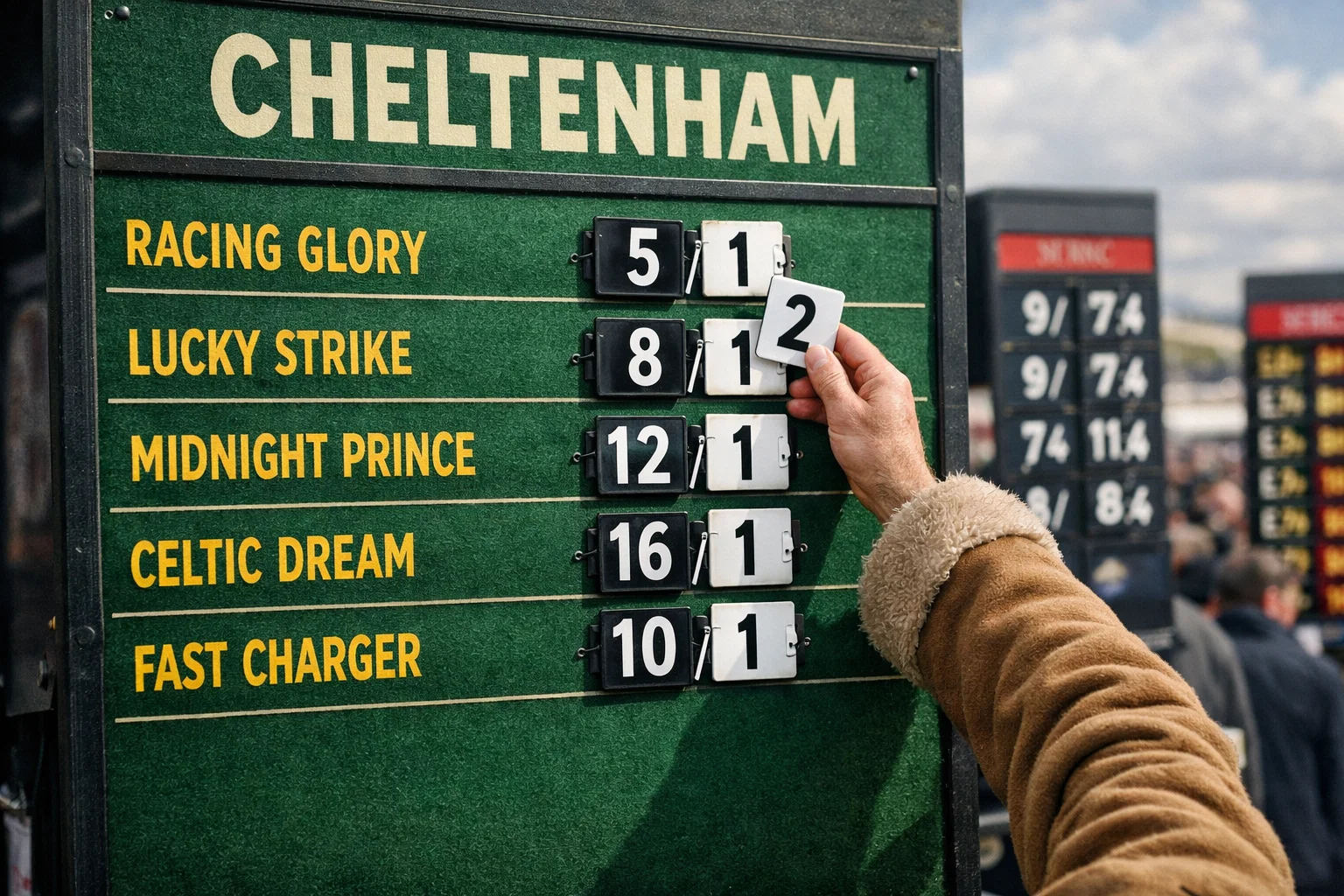
In this guide
Why BOG Is the First Feature to Check
Best Odds Guaranteed is the one bookmaker feature that experienced racing punters check before anything else. Not the welcome offer. Not the daily boosts. BOG. The reason is simple: it removes the single biggest frustration in horse racing betting — taking a price in the morning and watching it drift to a higher starting price by the off, knowing you are stuck with the lower number.
With BOG, that frustration disappears. If you take an early price and the starting price (SP) is higher, the bookmaker pays you at the SP. If the SP is lower than the price you took, you keep your original, better price. You get the best of both worlds, every time. At Cheltenham Festival, where market movements between morning and afternoon can be dramatic — especially on competitive handicaps and open championship races — BOG is not a promotional nicety. It is a structural advantage that compounds across 28 races over four days.
The value is particularly relevant in 2026. BHA data shows that turnover on Premier fixtures like Cheltenham rose by 1.1% even while overall racing turnover declined, meaning money is increasingly concentrated on major festivals. That concentration drives larger, more volatile price movements on race day — exactly the conditions where BOG delivers the most value. Take the price, keep the upside.
See also: cheltenham betting offers — your Cheltenham betting offers reference.
How BOG Works: Early Price vs SP
The mechanics of BOG are straightforward, but understanding how the starting price is determined helps explain why the feature matters so much at Cheltenham specifically.
When you place a bet on a horse at fixed odds — say, 8/1 on Tuesday morning — that price is locked in. Under normal circumstances, you are paid at 8/1 whether the horse drifts to 12/1 or shortens to 5/1 by the time the race starts. With BOG, the bookmaker compares your fixed odds to the official starting price at the moment the race begins. If the SP is higher than your price (say, 12/1), you are paid at 12/1. If the SP is lower (say, 5/1), you keep your 8/1. The settlement is always at whichever price is more favourable to you.
The starting price itself is determined by on-course bookmakers at the track. At Cheltenham, the on-course market is influenced by professional punters, large stables placing late commissions, and the sheer volume of money arriving in the final minutes before the off. This creates significant price volatility, particularly in the big handicaps where information about ground conditions, horse wellbeing, and stable confidence filters through in the hours before racing.
This volatility is where BOG earns its value. In a typical Cheltenham race, 30–40% of runners will see their SP differ from their early morning price by at least one point of odds. In a competitive 20-runner handicap, the movement can be much larger — a horse at 10/1 in the morning might start at 16/1 if money comes for rivals, or contract to 6/1 if word gets out that the yard is confident. With BOG, the upside of that drift is captured automatically. Without BOG, you are locked into the morning price regardless.
One technical point: BOG applies to the price at the time you place the bet versus the official SP. If you take 8/1 in the morning and the horse drifts to 12/1 mid-afternoon but then shortens back to 9/1 by the off, your BOG settlement is at 9/1 (the SP), not 12/1 (the peak price). BOG compares your price to the starting price, not to the highest price reached during the day.
BOG Policies by Bookmaker: Who Applies It at Cheltenham
Most major UK-licensed bookmakers offer BOG on Cheltenham races, but the policies differ in ways that affect the practical value of the feature. These differences are worth understanding before you decide where to place your early-price Festival bets.
Automatic vs opt-in. The majority of established operators apply BOG automatically to all qualifying horse racing bets. You do not need to click a button or enter a code. However, a small number of bookmakers require you to opt in, either per bet or as a one-time account setting. If BOG is not automatic with your chosen bookmaker, make sure you have activated it before the Festival begins.
Maximum payout limits. This is the most important variable. Some bookmakers apply BOG with no upper limit — if the SP is higher, you get paid at the higher price regardless of the resulting payout. Others cap the BOG benefit at a certain level: for example, BOG applies up to a maximum additional payout of £1,000 or £2,500. For most recreational punters, these caps are irrelevant. For anyone placing larger stakes on early prices, the cap determines whether BOG fully protects the upside or only partially.
Online vs in-shop. BOG policies sometimes differ between the bookmaker’s online platform and their high-street shops. Some operators offer BOG online but not in-shop, or vice versa. Since the vast majority of Cheltenham betting now happens online or via mobile, this distinction primarily matters if you plan to visit a physical betting shop. For online accounts, BOG is generally available across mobile, desktop, and app platforms without distinction.
Race restrictions. Most operators apply BOG to all UK and Irish horse racing, which covers every Cheltenham race. A few restrict BOG to specific meetings or race types. It is rare for a major bookmaker to exclude Cheltenham from BOG coverage, but it is worth confirming — particularly with newer or smaller operators where the policy may be less established.
Time restrictions. Some bookmakers only activate BOG from a certain time on race day — typically from the morning prices onwards. Early ante-post bets placed weeks before the race may not qualify for BOG at all operators. The distinction between an ante-post bet (which may not carry BOG) and a day-of-race early price (which typically does) is important. If you are backing a horse on the morning of the race at a fixed price, BOG should apply. If you are backing it three weeks in advance, NRNB is the relevant protection, not BOG.
The levy yield for horserace betting reached a record £108.9 million in FY2024/25, driven partly by high bookmaker margins at events like Cheltenham. Those margins reflect, among other things, the spread between early prices and starting prices — which is precisely what BOG allows punters to exploit. The bookmaker accepts the cost of BOG because it encourages early betting and locks in volume, but the benefit to the informed punter is genuine and measurable.
Using BOG to Exploit Early Price Value
BOG is passive by design — it works automatically once the bet is placed — but there is an active strategy that maximises the benefit. It comes down to timing, race selection, and knowing which types of price movement are most likely at Cheltenham.
The optimal approach is to bet early on races where you expect the SP to be higher than the morning price. This sounds like stating the obvious, but it has a specific application at Cheltenham. Races with large, competitive fields — the handicaps, the novice events, the mares’ races — are more prone to price drift than the small-field Grade 1 championships. In a 20-runner handicap, most horses will see their price move during the day, and the probability that at least some of them drift to a higher SP is high. In a 5-runner Champion Chase, the prices are more tightly held because the market is dominated by fewer opinions.
Morning prices at Cheltenham typically appear between 8am and 10am on race day. The market then evolves through the afternoon as on-course money, exchange activity, and late information change the landscape. The window between morning prices and the first race (usually around 1:30pm) is the prime BOG opportunity. Take your positions in the morning, and let the afternoon market movements work for you.
One specific pattern to watch: horses whose connections are publicly cautious about the going. If a trainer expresses doubt about the ground on the morning of the race, the horse’s price may drift as punters react to the uncertainty. If the horse ultimately runs despite the doubt (which is common — trainers hedge publicly more than they pull horses privately), the morning price you took may now be well below the SP. BOG captures the difference.
The compounding effect across the Festival is meaningful. If you take early prices with BOG on four or five bets per day across four days, the cumulative benefit from SP upgrades can add up to several points of additional odds over the week. On a winning bet, that might mean the difference between £80 profit and £120 profit. On a week of betting, the aggregate effect on your returns is significant — and it costs you nothing beyond the original bet. It is also worth noting that the Horserace Betting Levy Board recorded a record yield of £108.9 million in FY2024/25 despite falling turnover — an indicator that bookmaker margins are widening, which means larger SP movements on race day and, consequently, greater BOG value for early-price bettors.
Discover the types of Cheltenham betting offers.
Better Prices, Same Stakes
BOG is a feature that improves the price you receive, not a guarantee of winning. The same horse can lose at 12/1 just as easily as at 8/1. Do not let the comfort of BOG encourage you to bet on more races than you would otherwise, or at higher stakes than your budget allows.
If gambling is affecting your wellbeing, BeGambleAware.org provides free support. The National Gambling Helpline is available on 0808 8020 133.
