


Cheltenham Betting Offers 2026: Every Free Bet Compared and Analysed
The Cheltenham Festival is not just the biggest week in jump racing. It is the biggest week in British betting, full stop. William Hill projects around £450 million in total industry turnover across the four days of March 2026 — a figure that dwarfs every other racing event on the calendar. All 28 Festival races featured among the top 31 most-wagered horse races of 2025, joined only by the Grand National, the Derby, and the Scottish National. When the market is that concentrated, every bookmaker in the country reaches for the same weapon: promotional offers.
The result is a wall of free bets, enhanced odds, money-back specials, and loyalty deals that looks generous until you read the small print. A £30 free bet sounds like £30 in your pocket. It is not. Most free bets operate on a stake-not-returned basis, meaning you only keep the profit if you win. The real value of that £30 token is closer to £18–£22, depending on the odds you use it at. That gap between headline number and actual worth is where bookmakers make their margin — and where informed punters reclaim it.
"Whether it's a more even split of favourites from both sides of the Irish Sea or just generally a more competitive set of races, it's shaping up to be an intriguing Cheltenham from a betting perspective" — Lee Phelps, Spokesperson, William Hill. That competitive landscape matters. When there are fewer short-priced hotpots, the variance rises, and the value of offers that protect your downside — Non Runner No Bet, money-back specials, Best Odds Guaranteed — increases proportionally.
This guide breaks down every significant Cheltenham betting offer available for the 2026 Festival. No rankings based on affiliate commissions, no inflated totals that stack incompatible bonuses together. Instead, you get honest comparison tables, a free bet value calculator grounded in expected-value maths, and a strategy section built on what actually happened at Cheltenham 2025 — a year that humbled anyone who backed favourites blindly. Value, not hype. That is the operating principle throughout.
What the 2026 Festival Offer Landscape Actually Looks Like
- Industry-wide turnover for Cheltenham 2026 is forecast at £450 million — bookmakers are competing harder than ever for your opening bet.
- Most free bets are worth 60–75% of their face value due to stake-not-returned rules; a £30 free bet delivers roughly £18–£22 in real terms.
- The 2025 Festival saw all four championship favourites beaten — a reminder that each-way and value strategies outperform blind favourite-backing.
- Existing customer offers (daily boosts, Bet Clubs, acca insurance) are widely overlooked but often deliver better cumulative value than one-off welcome deals.
- Best Odds Guaranteed and Non Runner No Bet remain the two most undervalued offer types for serious Cheltenham punters.
Offers at a Glance: Comparison Table
Before diving into the detail, here is a snapshot of the main Cheltenham 2026 offers aimed at new customers. The table covers the essentials: minimum deposit, qualifying bet requirements, what you receive, expiry windows, and our value assessment based on effective return after wagering conditions. Bookmakers frequently adjust terms in the days leading up to the Festival, so treat this as a baseline — verify expiry dates and minimum odds directly before claiming.
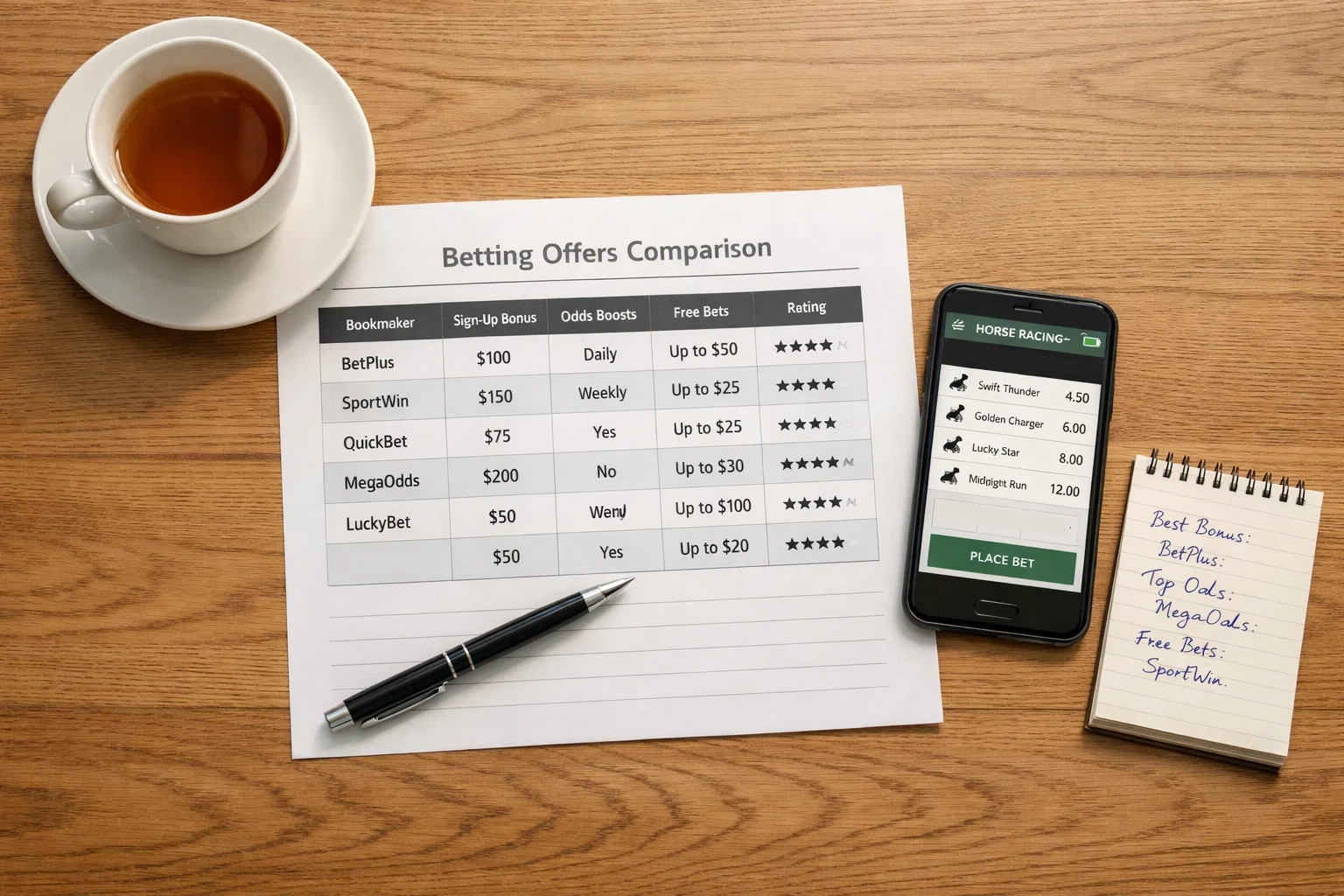
| Bookmaker | Offer Headline | Min Deposit | Qualifying Odds | Bet Type | Credit Received | Expiry | Value Rating |
|---|---|---|---|---|---|---|---|
| bet365 | Bet £10 Get £30 in Free Bets | £10 | 1/5 (1.20) | Single / Acca | 3 × £10 free bets | 30 days | Strong |
| William Hill | Bet £10 Get £30 in Free Bets | £10 | 1/2 (1.50) | Single / Each Way | 3 × £10 free bets | 7 days | Good |
| Paddy Power | Bet £20 Get £20 in Free Bets | £20 | Evens (2.0) | Sportsbook single | 1 × £20 free bet | 7 days | Average |
| Betfair Sportsbook | Bet £10 Get £30 in Free Bets | £10 | 1/2 (1.50) | Single / Acca | 3 × £10 free bets | 30 days | Strong |
| Sky Bet | Bet £10 Get £30 in Free Bets | £10 | 1/1 (2.0) | Single | £30 free bet token | 7 days | Good |
| Betway | Bet £10 Get £10 Free Bet | £10 | 1/1 (2.0) | Single / Acca | 1 × £10 free bet | 7 days | Below average |
| BoyleSports | Bet £10 Get £20 in Free Bets | £10 | 1/2 (1.50) | Single | 2 × £10 free bets | 7 days | Good |
| BetVictor | Bet £10 Get £40 in Bonuses | £10 | Evens (2.0) | Single | £30 free bets + £10 casino | 7 days | Strong (if sports only) |
| Coral | Bet £5 Get £20 in Free Bets | £5 | 1/2 (1.50) | Single / Each Way | 4 × £5 free bets | 7 days | Good (low entry) |
| Ladbrokes | Bet £5 Get £20 in Free Bets | £5 | 1/2 (1.50) | Single / Each Way | 4 × £5 free bets | 7 days | Good (low entry) |
Two patterns stand out. First, the dominant structure remains "Bet £10 Get £30" — bookmakers have converged on that ratio because it hits the psychological sweet spot between perceived generosity and acceptable cost of acquisition. Second, expiry windows have tightened. Several operators have moved from 30-day to 7-day windows, which forces faster use and reduces the chance you will find optimal odds. If an offer expires in seven days, plan your selections before signing up.
Value ratings here are not subjective impressions. They reflect the effective return — the realistic profit you can expect from each free bet after accounting for stake-not-returned rules and typical wagering at odds between 3.0 and 5.0. A "Strong" rating means the offer returns 65% or more of its headline value under normal conditions. "Average" falls in the 50–65% band, and "Below average" sits under 50%. These thresholds matter when you are choosing between two seemingly identical £30 offers with different qualifying restrictions.
Top Cheltenham Free Bets for New Customers
Every bookmaker licensed in Great Britain rolls out a welcome offer for Cheltenham week. The mechanics vary less than the marketing suggests — most follow the Bet and Get template — but the qualifying conditions and credit structures differ enough to separate genuinely useful deals from ones that look good only in a banner ad. Below are the main new customer offers available for the 2026 Festival, assessed on entry cost, qualifying friction, and realistic return.
bet365: Bet £10 Get £30
Three separate £10 free bet tokens credited once the qualifying bet settles. Minimum odds of 1/5 on the qualifier make this one of the easiest to trigger — you can place a short-priced qualifying bet on a Cheltenham favourite without forcing a risky selection. The 30-day expiry gives breathing room. Tokens work on singles and accumulators. Stake not returned on free bets.
William Hill: Bet £10 Get £30
Same headline as bet365 but with higher qualifying odds (1/2 minimum) and a tighter 7-day expiry. Credits arrive as three £10 free bets. William Hill historically runs Cheltenham-specific promotions on top — enhanced odds cards and daily specials — which can layer on additional value. Each-way bets qualify, which suits punters who want the qualifying bet itself to carry tactical intent.
Paddy Power: Bet £20 Get £20
Higher entry point at £20, with evens minimum odds on the qualifier. The return ratio (1:1) is less generous than the 1:3 offers above, but Paddy Power offsets this with aggressive Festival-week promotions — money-back specials, enhanced accas, and race-specific boosts. If you plan to bet actively across all four days, the existing customer offers may outweigh the thinner welcome deal.
Betfair Sportsbook: Bet £10 Get £30
Three £10 free bets after a £10 qualifying bet at 1/2 or above. The unique angle here is proximity to the Betfair Exchange — you can place backed bets on the sportsbook and lay on the exchange, which makes these free bets particularly efficient for matched betting strategies. The 30-day window is the joint longest in this cohort.
Sky Bet: Bet £10 Get £30
A single £30 free bet token rather than three smaller ones. Minimum qualifying odds are evens, which is the highest threshold in this list and requires a genuine selection rather than a placeholder. The upside: one larger token means you can target a single selection at bigger odds for maximum expected value. The downside: one shot, so a losing free bet at 2.0 delivers less than three separate bets at 4.0.
Betway: Bet £10 Get £10
The thinnest offer in the group — a 1:1 ratio with evens minimum odds. Unless Betway introduces Cheltenham-specific enhancements closer to the Festival, this sits at the bottom of any objective ranking. Useful only if you specifically value Betway's in-play interface or accumulator features.
BetVictor: Bet £10 Get £40
A blended offer: £30 in sports free bets plus £10 in casino bonuses. If you ignore the casino component entirely, the sports return still beats most competitors at a 1:3 ratio. Qualifying odds are evens, and the 7-day expiry means you need to deploy during Festival week itself. The casino element has its own wagering requirements — 30x turnover is standard — which makes it functionally worthless for anyone interested only in racing.
BoyleSports: Bet £10 Get £20
Two £10 free bets after a £10 qualifier at 1/2 or above. BoyleSports often offers competitive each-way terms on Cheltenham handicaps, which can add incidental value beyond the welcome deal. The 7-day expiry is tight but workable across a four-day festival.
Coral: Bet £5 Get £20
The lowest entry point at £5, returning four £5 free bets. For punters testing a new bookmaker without committing significant capital, this is the cleanest option. The 1:4 ratio is the most generous in the table on a proportional basis. Four separate tokens allow diversification across different race types and days.
Ladbrokes: Bet £5 Get £20
Structurally identical to Coral (same parent company, Entain), with four £5 free bets from a £5 qualifying bet. Ladbrokes and Coral often mirror each other's terms, so there is little reason to choose one over the other unless you have a preference for the app interface or plan to use existing customer offers that differ between brands.
Midnite: Bet £10 Get £20
A newer entrant aiming at a younger demographic. Two £10 free bets with a 1/2 minimum on the qualifier. Midnite's Cheltenham coverage is growing but remains less comprehensive than the established operators. Worth considering if their Bet Club loyalty programme — which rewards weekly activity with recurring free bets — aligns with your longer-term betting habits.
The mathematically optimal approach: open accounts with the best 3–4 offers, use qualifying bets on selections you would have backed anyway at Cheltenham, and deploy the resulting free bets on selections at odds of 4.0 or higher to maximise stake-not-returned returns. Spreading across multiple bookmakers also unlocks access to diverse existing customer offers throughout Festival week.
How Cheltenham Free Bets Actually Work
A free bet is not free money. That distinction matters more than any other piece of information in this guide, and it is the one most consistently glossed over by affiliate sites. A free bet is a promotional token that lets you place a wager without risking your own cash — but with a critical catch. Under the standard stake-not-returned (SNR) model, if your free bet wins, you receive only the profit portion. The original stake amount is deducted from your payout. This single mechanic reduces the real value of every free bet by a substantial margin.
The Qualifying Bet
To unlock a free bet, you must first place a qualifying bet with your own money. This is the bookmaker's gatekeeping mechanism: they want to see genuine betting activity before releasing promotional credit. Qualifying conditions typically include a minimum deposit (usually £5–£10), a minimum stake matching the deposit, and a minimum odds threshold. The odds requirement varies from 1/5 (1.20) at the lenient end to evens (2.0) at the stricter end. Your qualifying bet must also be of a specific type — singles, each-way, or first sportsbook bet — and it must settle before credits are released. Accumulators sometimes qualify, sometimes do not. Always check.
What counts as a qualifying bet? A qualifying bet must be placed with real deposited funds (not bonus money), at or above the stated minimum odds, in the required bet type, and within the promotional registration window. Cash-out or voided bets do not count. If you use an e-wallet (Skrill, Neteller) for deposit, many bookmakers exclude you from the offer entirely.
From Credit to Profit: The Step-by-Step Process
- Register a new account with the bookmaker during the promotional period. Use a debit card for deposit — e-wallets are frequently excluded.
- Deposit the minimum required amount (typically £5 or £10).
- Place your qualifying bet at odds equal to or above the minimum threshold. Choose a selection you are comfortable backing, since this is real money at genuine risk.
- Wait for the qualifying bet to settle. Some bookmakers credit free bets within minutes; others take up to 24 hours.
- Use your free bet tokens on Cheltenham selections. Select "use free bet" at the betslip stage. The free bet stake is not included in any return.
- Collect only the profit if the free bet wins. On a £10 free bet at odds of 4.0, a winning bet returns £30 (not £40) — the £10 stake is retained by the bookmaker.

Wagering requirements on free bets. Most Cheltenham free bet offers do not carry traditional wagering requirements (the rollover multipliers common in casino bonuses). However, some operators attach conditions: the free bet must be used on odds of 1/2 or above, it cannot be split into smaller stakes, and it expires within 7–30 days. A minority of offers credit "bonus funds" rather than free bets, which do carry rollover — typically 3x to 6x the bonus amount. Read terms carefully: "free bet" and "bonus balance" are legally distinct products.
According to analysis from OddsIndex, the real value of a stake-not-returned free bet typically falls between 60% and 75% of its nominal face value. A £30 free bet is worth approximately £18–£22.50 in expected returns. That figure is not a reason to ignore free bets — it is a reason to use them strategically, at odds that maximise the profit-to-expectation ratio.
Six Types of Cheltenham Offers Explained
Not all promotional offers function the same way, and treating them interchangeably is one of the most common mistakes punters make during Festival week. Each type has a distinct mechanic, a specific use case, and a different real value. Matching the right offer type to the right race and the right strategy is where informed bettors gain an edge. Here are the six core categories you will encounter across Cheltenham 2026.
Bet and Get — The standard welcome offer structure. You place a qualifying bet of £X, and the bookmaker credits you with £Y in free bets once it settles. Typical Festival format: Bet £10, Get £30. The free bets are almost always stake-not-returned, meaning a winning £10 free bet at 4.0 pays £30, not £40. Best used on selections at odds of 3.0 or higher, where the SNR reduction is proportionally smaller relative to your profit.
Enhanced Odds — A bookmaker inflates the price on a specific selection to attract attention. A horse priced at 3/1 in the general market might be offered at 6/1 or 10/1 as a "super boost." The catch: maximum stakes are almost always capped (typically £5–£10), and winnings above the standard odds are often paid as free bet credits rather than cash. Enhanced odds look spectacular in advertising but rarely move the needle on your overall P&L. Treat them as small bonuses, not as a strategy.
Money-Back Offers — If your bet loses under specific conditions (e.g., your horse finishes second, or loses by a head), the bookmaker refunds your stake. The critical question: is the refund in cash or as a free bet? A cash refund is genuinely valuable — it restores your actual position. A free bet refund is worth only 60–75% of its face value due to SNR rules. Most Cheltenham money-back offers refund as free bets. Read the terms before assuming you have full downside protection.
Best Odds Guaranteed (BOG) — You take an early price on a horse, and if the Starting Price (SP) is higher when the race begins, the bookmaker pays you at the larger price. BOG is quietly one of the most valuable offer types at Cheltenham, where prices can shift significantly between morning and post-time due to market moves, non-runners, and going changes. If you back a horse at 8/1 in the morning and it drifts to 12/1 by the off, BOG means you get 12/1. Most major bookmakers apply BOG to all Cheltenham races, but some exclude ante-post bets or cap the maximum payout.
Non Runner No Bet (NRNB) — If the horse you back does not run, your stake is refunded in full (as cash, not a free bet). Standard ante-post betting rules mean that if your selection is withdrawn before the race, you lose your stake. NRNB removes that risk entirely. This is particularly relevant at Cheltenham, where ground conditions in March can lead to late withdrawals. NRNB offers are most commonly applied to specific races — the Gold Cup, Champion Hurdle, and other Grade 1 events — rather than blanket-applied across the card.
Extra Places — In each-way betting, the bookmaker pays out on a certain number of finishing positions (typically the first three or four, depending on the number of runners). Extra place offers extend this — paying out on the 5th, 6th, or even 7th place. At Cheltenham, where handicap fields can have 20+ runners, extra places meaningfully increase the probability that your each-way bet returns something. The place terms (1/4 odds, 1/5 odds) vary by bookmaker and by race, so comparing these is essential for each-way punters.
Understanding these six types is the foundation. The next question — how they stack up against each other in direct comparison — is what separates browsing from decision-making.
Full Comparison: Every Offer Side by Side
The summary table earlier covered the headline details. This expanded comparison adds the dimensions that matter once you move past the initial sign-up: how each bookmaker handles specific offer types across the Festival, and where the cumulative value sits across all four days. The goal is not to crown a single winner — different bookmakers suit different approaches — but to make the trade-offs visible.
| Bookmaker | Welcome Offer | BOG | NRNB | Extra Places | Daily Boosts | Acca Insurance | Cash Out |
|---|---|---|---|---|---|---|---|
| bet365 | Bet £10 Get £30 | Yes (all UK/IRE) | Selected races | Selected handicaps | Yes | Yes (5+ legs) | Full + Partial |
| William Hill | Bet £10 Get £30 | Yes (all UK/IRE) | Selected races | Selected races | Yes (daily) | Yes (4+ legs) | Full + Partial |
| Paddy Power | Bet £20 Get £20 | Yes (all UK/IRE) | Selected races | Festival handicaps | Yes (extensive) | Yes (5+ legs) | Full + Partial |
| Betfair Sportsbook | Bet £10 Get £30 | Yes | Selected races | Selected races | Yes | Yes (3+ legs) | Full + Partial |
| Sky Bet | Bet £10 Get £30 | Yes (UK/IRE) | Selected races | Major handicaps | Yes | Yes (4+ legs) | Full |
| Coral | Bet £5 Get £20 | Yes | Selected races | Selected races | Yes | Yes (4+ legs) | Full + Partial |
| Ladbrokes | Bet £5 Get £20 | Yes | Selected races | Selected races | Yes | Yes (4+ legs) | Full + Partial |
| BetVictor | Bet £10 Get £40 | Yes (UK/IRE) | Selected | Festival specials | Yes | Yes (5+ legs) | Full |
A few observations emerge from this side-by-side view. BOG is now essentially universal among major licensed operators for UK and Irish racing, which means the differentiator is not whether they offer it, but whether they cap the maximum payout or exclude certain bet types. NRNB remains selective — no bookmaker applies it to the entire Cheltenham card as standard, so checking which specific races carry NRNB protection is a pre-Festival task. Extra places are where real variation exists: some bookmakers extend places on all Festival handicaps, while others cherry-pick specific races for promotional visibility.
The acca insurance threshold is another differentiator. Betfair's three-leg minimum means you can protect shorter accumulators, while bet365 and Paddy Power require five legs — a structure that increases both the risk and the excitement. For Cheltenham, where four-fold accumulators across the day's Grade 1 races are popular, the leg requirement matters.
Cheltenham Offers for Existing Customers
The overwhelming majority of Cheltenham offer content online focuses on new customer deals. That is a disservice to the people who matter most to bookmakers' bottom lines: the existing customers who already have funded accounts and established betting patterns. If you signed up six months ago for a Premier League free bet and now want to use the same account for Cheltenham, you are not starting from zero — you are starting from a position where bookmakers actively want to retain your activity. The trick is knowing where to look.
Daily Price Boosts
Most major bookmakers publish daily enhanced prices during Cheltenham week. These typically apply to one or two selections per day — often the favourite in a feature race — with the price boosted by 20–50%. Unlike new customer enhanced odds, existing customer boosts usually have higher maximum stakes (£25–£50 rather than £5–£10) and pay out in cash rather than free bet credits. Check each bookmaker's promotions page daily from Tuesday morning; boosts are often published the night before or early on race day.
Bet Clubs and Loyalty Programmes
Several bookmakers run recurring loyalty structures. bet365's Open Offers reward consistent wagering with periodic free bet credits. Midnite's Bet Club gives a weekly free bet to customers who place a minimum number of qualifying bets. William Hill's loyalty scheme functions similarly. The common thread: place X bets of £Y at minimum odds of Z during the week, receive a free bet at the end. During Cheltenham, when you are naturally placing more bets than usual, these thresholds become easier to meet incidentally. Track your qualifying bets so you do not miss a reward you were already on course to earn.
Acca Insurance
Festival week is peak accumulator season. Bookmakers know this and extend acca insurance to existing customers: if one leg of your accumulator loses, you receive your stake back as a free bet. Conditions vary — some require four or more legs, others five, and the minimum odds per leg typically sit at 1/5 or 1/2. For Cheltenham, where building a daily four-fold across the feature races is common, acca insurance offers meaningful downside protection. The key is understanding whether the refund comes as cash or a free bet: cash refunds are worth face value, free bet refunds are worth 60–75%.
Reload Bonuses and Festival Specials
Some bookmakers offer deposit matches or bonus credits to existing customers during major events. These are less predictable than welcome offers — they often arrive as targeted emails or app notifications rather than publicly listed promotions. Keep push notifications enabled for your betting apps during Festival week, and check your inbox daily. Reload bonuses typically carry wagering requirements (3x–6x the bonus) and short expiry windows (48–72 hours), so deploy them immediately on selections you have already analysed.
The cumulative value of existing customer offers across four days — daily boosts, Bet Club credits, acca insurance payouts, reload bonuses — can exceed the one-off value of a single new customer welcome deal. The difference is that extracting this value requires daily attention, not a single sign-up click.
Cheltenham Betting Strategy: Lessons from 2025
The 2025 Cheltenham Festival was a humbling week for punters and a banner week for bookmakers. All four championship race favourites were beaten — Constitution Hill in the Champion Hurdle, Majborough in the Supreme Novices' Hurdle, and short-priced market leaders in the Champion Chase and the Gold Cup. On Day 1 alone, the bookmaking industry avoided an estimated £50 million in payouts when the two most popular selections failed to deliver. That is not a statistical anomaly. It is Cheltenham doing what Cheltenham does — rewarding preparation and punishing assumption.
"I've been doing this job for almost 20 years and I can't remember a festival where so many of the fancied horses were beat" — Paul Binfield, Spokesperson, Paddy Power. When a bookmaker's own representative describes the week in those terms, the message for punters is clear: blind favourite-backing at Cheltenham is a losing proposition over any meaningful sample size.
"At the start of the week it would have been a dream to suggest we would get all four short-priced favourites beaten in the championship races" — Lee Phelps, Spokesperson, William Hill. Two senior industry figures, two confirming data points. The 2025 Festival was not an outlier so much as an extreme expression of a consistent pattern: Cheltenham's undulating left-handed track, the unique demands of Festival-pace racing, and the emotional intensity of championship events create an environment where form lines established elsewhere frequently collapse.
Why Each-Way Betting Suits the Festival
When favourites lose at the rates seen in 2025, each-way betting becomes the most rational default strategy. An each-way bet gives you two chances to profit — a return on the win and a return on the place. In a 20-runner Cheltenham handicap, where four or five places pay out, a 14/1 shot finishing third returns a meaningful profit on the place portion even though it did not win. This is not conservative betting. It is variance management. The Festival offers enough volatility that protecting your downside through place returns can generate better risk-adjusted outcomes than win-only betting on shorter-priced selections.

At the 2025 Festival, punters who backed each-way on selections between 8/1 and 20/1 in handicap races outperformed those who backed win-only on championship race favourites. The lesson: use your free bets on each-way selections at longer odds, where the SNR structure hurts less and the place terms provide a safety net.
Bankroll Management Across Four Days
Twenty-eight races across four days. Seven races per day. The temptation to spread your budget thinly — a bet on every race — leads to fragmented stakes, impulsive decisions on unfamiliar races, and a depleted bankroll by Gold Cup Friday. A more disciplined approach: allocate no more than 5% of your total Festival budget to any single race, set a daily maximum of 25–30% of total budget, and identify 8–12 races where you have a genuine view rather than trying to cover all 28.
The broader market context reinforces this discipline. Total betting turnover on British racing fell 6.8% in 2024 compared to 2023, extending a multi-year decline. Yet the picture is not uniformly bleak. Average per-race turnover on Premier fixtures — the category that includes Cheltenham — actually rose by 1.1%, while Core fixture turnover dropped 8.1%. Bettors are concentrating their spending on major events. That means the pools at Cheltenham are deeper, the markets are sharper, and casual money is competing alongside professional money. Allocating your budget deliberately is not paranoia. It is proportional response to a market that is getting more competitive, not less.
Set your total Festival budget before Tuesday. Split it: 25% per day maximum, 5% per race maximum, and keep 10–15% in reserve for opportunities that emerge from race results and shifting markets. No chasing. The maths works only if the discipline holds.
Watch your free bet expiry dates. Several 2026 offers carry 7-day expiry windows. If you sign up on the Monday before the Festival and your free bets are credited on Tuesday, they expire the following Monday — which means you lose them if you plan to save them for Gold Cup Friday and encounter any delay. Check the exact credit and expiry timelines for every offer you claim. Do not assume you have the full Festival week.
The Festival in Numbers
Cheltenham is not just a racing event with a betting sideshow. It is the single most concentrated betting event in the British sporting calendar, with economic tentacles that reach far beyond the racecourse itself. Understanding the scale helps explain why bookmakers invest so heavily in promotional offers during this week — and why those offers exist in the form they do.
Attendance and the Shift Online
Total attendance at the 2025 Festival was 218,839 — the lowest figure in a decade, averaging 54,709 per day. That represents a decline of roughly 22% from the record peak of 280,627 set in 2022, the first post-Covid Festival. "We welcomed a record crowd of 280,627 over the four days of The Festival in 2022 and it is very satisfying to see that have such a tremendously beneficial effect on the wider economy" — Ian Renton, Regional Managing Director (West Region), The Jockey Club. That 2022 high watermark now looks like a post-lockdown surge rather than a new baseline. The on-course audience is contracting while online engagement intensifies, which is precisely why digital betting offers have become the primary battleground for customer acquisition.

Economic Impact
Research conducted by the University of Gloucestershire for The Jockey Club estimated the total economic impact of the 2022 Festival at £274 million — nearly triple the £100 million figure recorded in 2016. The average Festival-goer spent £697 across admission, travel, accommodation, food, and betting during their visit. Two-thirds of attendees (67%) described the Festival as a "bucket list" experience, and 53% said they attend regularly. These are not casual spectators — they are a committed, spending-heavy audience that bookmakers target with precision.
In 2025, no single racing fixture came close to Cheltenham's grip on the betting market. The Festival occupied 28 of the top 31 positions in the annual most-wagered race rankings — a concentration so extreme that only three other events (the Grand National, the Derby, and the Scottish Grand National) managed to break through.
Prize Money and Industry Revenue
The total prize fund for the 2025 Festival stood at approximately £5 million across 28 races, with the Gold Cup alone carrying a purse of £625,000 (£363,999 to the winner). These figures matter to bettors because prize money attracts the best horses, which in turn creates deeper, more competitive fields — the kind of markets where form analysis and strategic offer use deliver the highest returns.
On the revenue side, the Cheltenham Festival is a significant contributor to the broader industry's financial health. The Horserace Betting Levy Board reported a record levy yield of £108.9 million for the financial year ending March 2025 — the highest since the levy system was reformed in 2017. Paradoxically, this record arrived alongside falling turnover, suggesting that bookmaker margins have expanded, partly driven by favourable results at festivals like Cheltenham 2025 where heavily backed favourites lost.
Accommodation prices in Cheltenham itself spike by as much as 650% during Festival week, according to research cited by Horse Events UK. That figure alone tells you something about the demand intensity this event generates — and it contextualises the value of free bets in a week where every other cost is inflated.
Cheltenham Free Bet Toolkit
Three quick calculators built on this guide’s own numbers: work out what a free bet is really worth, check what Best Odds Guaranteed adds when a price drifts, and see if your accumulator qualifies for insurance.
What is your free bet really worth?
EV = Free Bet Stake × (Odds − 1) × (1 / Odds), the same stake-not-returned formula used throughout this guide. Bands mirror the guide’s own value ratings: Strong is 65%+ of face value, Average is 50–65%, Below average is under 50%.
What does BOG add if the price drifts?
Best Odds Guaranteed pays out at whichever is higher — your taken price or the Starting Price. If the SP drifts below your taken price, BOG changes nothing; you still get your original price. Applies to win and each-way singles at most major bookmakers for UK/IRE racing — check for ante-post exclusions and payout caps.
Does your accumulator qualify for insurance?
Insurance normally covers exactly one losing leg, with every other leg winning, and typically pays as a free bet rather than cash — worth an estimated 60–75% of face value under stake-not-returned rules, the same range this guide uses for free bets generally. Some bookmakers refund in cash instead; always confirm in the specific offer’s terms.
Free Bet Value Calculator
The difference between the headline value of a free bet and its actual expected return is the single most misunderstood aspect of betting offers. A £30 free bet is not worth £30. It is worth whatever amount you can expect to extract from it after accounting for the stake-not-returned mechanism and the odds at which you use it. This section provides the maths — no assumptions, no hand-waving, just the formula.
The SNR Formula
For a stake-not-returned free bet, the expected value (EV) formula is straightforward:
EV = Free Bet Stake × (Odds − 1) × (1 / Odds)
At decimal odds of 3.0 (2/1): EV = £30 × (3.0 − 1) × (1 / 3.0) = £30 × 2.0 × 0.333 = £20.00. Your £30 free bet is worth £20 in expected terms. At odds of 4.0 (3/1): EV = £30 × 3.0 × 0.25 = £22.50. At odds of 6.0 (5/1): EV = £30 × 5.0 × 0.167 = £25.00. The pattern is consistent: higher odds yield a higher expected value per free bet, but the gains flatten as odds increase. The sweet spot for maximising EV on a single free bet is typically between 4.0 and 7.0.

Worked example: £30 free bet at different odds
At 2.0 (evens): profit if win = £30; probability ≈ 50%; EV = £15.00. Real value = 50% of face value.
At 3.0 (2/1): profit if win = £60; probability ≈ 33%; EV = £20.00. Real value = 67% of face value.
At 5.0 (4/1): profit if win = £120; probability ≈ 20%; EV = £24.00. Real value = 80% of face value.
At 10.0 (9/1): profit if win = £270; probability ≈ 10%; EV = £27.00. Real value = 90% of face value.
The EV rises with odds, but so does variance. A balanced approach: use free bets at odds between 4.0 and 6.0 to capture 75–83% of face value without excessive reliance on long shots landing.
Matched Betting Conversion
For punters who prefer a guaranteed return over a probabilistic one, matched betting offers an alternative. By backing a selection with the free bet on a bookmaker and laying the same selection on a betting exchange, you can lock in a fixed profit regardless of the outcome. According to OddsIndex, typical matched betting conversion rates for free bets fall between 70% and 80% of face value. A £30 free bet converted through matched betting would yield approximately £21–£24 in guaranteed profit. The exact figure depends on the back-lay spread and exchange commission, but the range is consistent across most liquid Cheltenham markets.
The decision between using a free bet on a genuine selection (probabilistic EV) versus matched betting (guaranteed conversion) depends on your risk tolerance and whether you have access to an exchange account. Both approaches confirm the same underlying truth: the headline value of a free bet is a marketing number, not a financial one. Plan accordingly.
Frequently Asked Questions
How do Cheltenham free bets actually work, and what is stake not returned?
A Cheltenham free bet allows you to place a wager without using your own money, but under the stake-not-returned (SNR) model — which is the standard for virtually all UK bookmaker offers — you only receive the profit if your bet wins. The stake itself is not included in your payout. For example, if you use a £10 free bet on a selection at odds of 4.0 and it wins, you receive £30 (the £40 return minus the £10 stake). If it loses, you lose nothing because no real money was at risk. To receive a free bet, you must first place a qualifying bet with deposited funds at the specified minimum odds. Once that bet settles, the free bet credits appear in your account — typically within minutes, though some bookmakers take up to 24 hours. Most Cheltenham free bets expire within 7 to 30 days, so timing your sign-up to coincide with the Festival is important.
Can I use Cheltenham free bets on accumulator and each-way bets?
This depends entirely on the bookmaker's terms and conditions. Some operators allow free bets to be used on any bet type including singles, each-way, and accumulators. Others restrict free bets to singles only, or exclude each-way use. A few bookmakers split their free bet credits into multiple smaller tokens (e.g., 3 × £10 rather than 1 × £30), which forces you to use them on separate bets — effectively preventing you from placing one larger accumulator. Always check the specific terms of each offer before planning how to deploy your free bets. As a general rule, using free bets on singles at odds between 4.0 and 6.0 delivers the best expected value under SNR rules, but if your bookmaker allows each-way free bet use, that can be a strong tactical option on competitive Cheltenham handicaps with large fields.
Will affordability checks affect my ability to claim Cheltenham betting offers?
For the vast majority of bettors, no. The UK Gambling Commission's financial vulnerability checks — introduced as part of the ongoing regulatory framework — are designed to identify customers who may be spending beyond their means. According to data from the Gambling Commission, approximately 95% of the 530,000 light-touch checks conducted passed through automatically and without friction, using credit reference agency data that requires no action from the customer. You will not be asked to submit payslips or bank statements unless your spending patterns trigger enhanced checks, which typically apply at higher thresholds. The process runs in the background during account registration and does not delay free bet activation. If you are betting within your means — and you should be — these checks are invisible.
Responsible Gambling
Betting on the Cheltenham Festival should be entertainment, not financial strategy. Set a budget before the week begins and treat it as money spent, not money invested. Every licensed UK bookmaker is required to offer deposit limits, loss limits, session time reminders, and self-exclusion options — use them proactively, not reactively. The Gambling Commission reports that horse racing betting participation spikes from 4% to 7% during the spring Festival season, which means many people betting at Cheltenham are seasonal or occasional bettors encountering high-intensity gambling environments for the first time.
If you feel your gambling is becoming difficult to control, contact the National Gambling Helpline on 0808 8020 133, or visit BeGambleAware.org. GamStop offers self-exclusion from all UK-licensed online gambling operators at gamstop.co.uk. These services are free, confidential, and available 24 hours a day. No free bet is worth more than your financial or mental wellbeing.
